
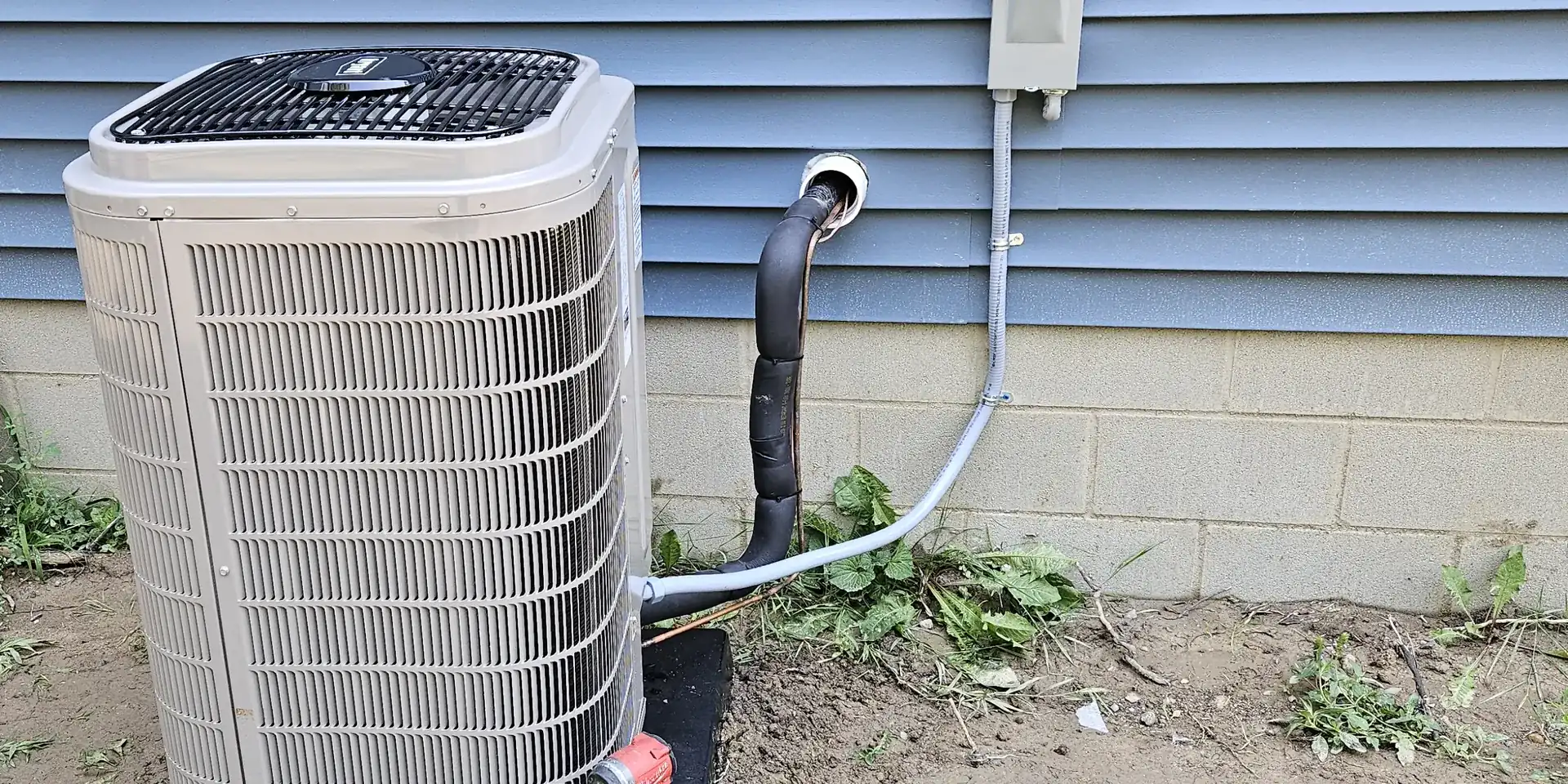
If you have had an air conditioner serviced recently, you may have heard the technician mention that "the refrigerant is changing" and wondered what that means for you. The short version is that the industry has moved to a new refrigerant for new equipment, the old refrigerant will get more expensive over time, and none of this requires you to do anything today. The longer version matters if your system is aging, because it changes the repair-versus-replace math. Here is what Southeast Michigan homeowners should know.
Quick answer
As of January 1, 2025, manufacturers can no longer build new residential air conditioners and heat pumps that use R-410A refrigerant; new equipment uses R-454B instead. Your existing R-410A system is perfectly legal to keep running and servicing for as long as it lasts. The practical impact is that R-410A will gradually become more expensive for repairs, which makes a major refrigerant-related repair on an older system harder to justify than it used to be.
What actually changed, and why
Under the federal AIM Act, the EPA is phasing down refrigerants with a high global warming potential. R-410A, which has been the standard in residential air conditioners and heat pumps for about two decades, is one of them. Beginning January 1, 2025, manufacturers stopped producing new residential systems charged with R-410A. Equipment already built could still be sold and installed through a transition period, but the pipeline is now almost entirely new-refrigerant equipment.
The replacement for most residential equipment is R-454B. It does the same job with a much lower environmental impact. If this sounds familiar, it is: the industry went through the same change when R-22, often called Freon, was phased out, and R-410A was the replacement then.
No, you do not have to replace your current system
This is the point that causes the most worry, so we want to be clear. The phase-out applies to manufacturing new equipment. It does not apply to systems already in homes. If your R-410A air conditioner works, keep using it. It can be serviced, recharged, and repaired for its entire remaining life. There is no deadline that makes it illegal or unserviceable.
What you cannot do is put R-454B into an R-410A system. The two refrigerants run at different pressures and require different components, so they are not interchangeable and cannot be mixed. A system built for R-410A stays an R-410A system.
How it affects repair costs
R-410A is still being produced for servicing existing equipment, but production is being reduced on a schedule. As supply tightens, the price per pound rises. We saw exactly this pattern with R-22, which went from inexpensive to very costly over several years. R-410A is on the same path, more gradually.
In practice this means a refrigerant leak on an older system, which already required finding and fixing the leak plus recharging the system, now carries a higher and rising refrigerant cost. On a 5-year-old unit, that repair is still clearly worth doing. On a 14-year-old unit, the same repair may cost a meaningful fraction of a new system that would use the new refrigerant, run more efficiently, and come with a fresh warranty. That is the conversation we have with homeowners more and more often.
Is R-454B safe?
R-454B is classified as A2L, which means mildly flammable. That word understandably gives people pause, so here is the context. A2L refrigerants are very difficult to ignite, burn slowly if they do, and are already in use in millions of systems worldwide. Equipment designed for R-454B includes leak-detection sensors and safety controls that older systems never had, and installation practices and building codes have been updated to match.
The safety of a refrigerant depends far more on the quality of the installation than on the chemistry. That is true of R-410A and it is true of R-454B. Work with a contractor whose technicians are trained and equipped for the new refrigerant, and there is no reason for concern.
What to do if your air conditioner fails this year
First, do not panic-buy. A failed AC in July is stressful, but the decision is the same one it has always been: how old is the system, what does the repair cost, and how much longer is it likely to last? If the unit is under 10 years old and the problem is not refrigerant-related, repair is usually the right move. If it is older, or the problem involves a compressor or a significant leak, replacement deserves a serious look.
Second, expect any new system to use R-454B. That is not a downgrade. New equipment is more efficient than what it replaces, and the early price premium on new-refrigerant equipment has largely settled as manufacturers have scaled up.
Third, consider a heat pump instead of a straight air conditioner. In Southeast Michigan, a cold-climate heat pump paired with your gas furnace cools your home in summer and takes over most of the heating in winter, often for less than you pay now. If you are replacing the outdoor unit anyway, it is worth pricing both options.
Finally, keep in mind that the federal 25C tax credit for new air conditioners and heat pumps expired for equipment placed in service after December 31, 2025. Utility rebates from DTE Energy and Consumers Energy may still apply, and we confirm current incentives with every quote.
Frequently Asked Questions
Is R-410A refrigerant being banned?
Production of new equipment using R-410A ended for residential systems on January 1, 2025, and the refrigerant itself is being phased down over time. It is not banned for use in existing systems. Your current R-410A air conditioner or heat pump can be legally serviced and recharged for as long as it lasts.
Can I put R-454B in my old R-410A air conditioner?
No. R-454B is not a drop-in replacement. It operates at different pressures and needs different components, so it cannot be used in or mixed with an R-410A system. A system built for R-410A stays an R-410A system.
Will my AC repair cost more because of the refrigerant change?
Repairs that require adding refrigerant will gradually cost more as R-410A supply tightens and its price rises. Repairs that do not involve refrigerant, such as a capacitor, fan motor, or control board, are not affected.
Is R-454B refrigerant dangerous in my home?
R-454B is classified as mildly flammable, but it is difficult to ignite, and equipment built for it includes leak sensors and safety controls that older systems lack. It is already in use in millions of systems. Proper installation by a trained contractor is what matters most.
Should I replace my working R-410A system now before refrigerant gets expensive?
Not if it is working well and under about 12 years old. Run it. Plan for replacement when it reaches the end of its life or faces a major refrigerant-related repair. There is no advantage to replacing a healthy system early.
If your air conditioner is showing its age, or you simply want to understand your options before summer, Kern Mechanical is glad to help. We are a family-owned, licensed and insured mechanical contractor serving Oakland, Livingston, Genesee, Macomb, Wayne, and Washtenaw counties. Our technicians are trained and equipped for the new refrigerant, quotes are always free, and we will give you a straight answer about whether to repair or replace.
Free consultation
Talk to Kern Mechanical LLC
Our family-owned team handles residential, commercial, and industrial HVAC across Southeast Michigan. Quotes are always free.