
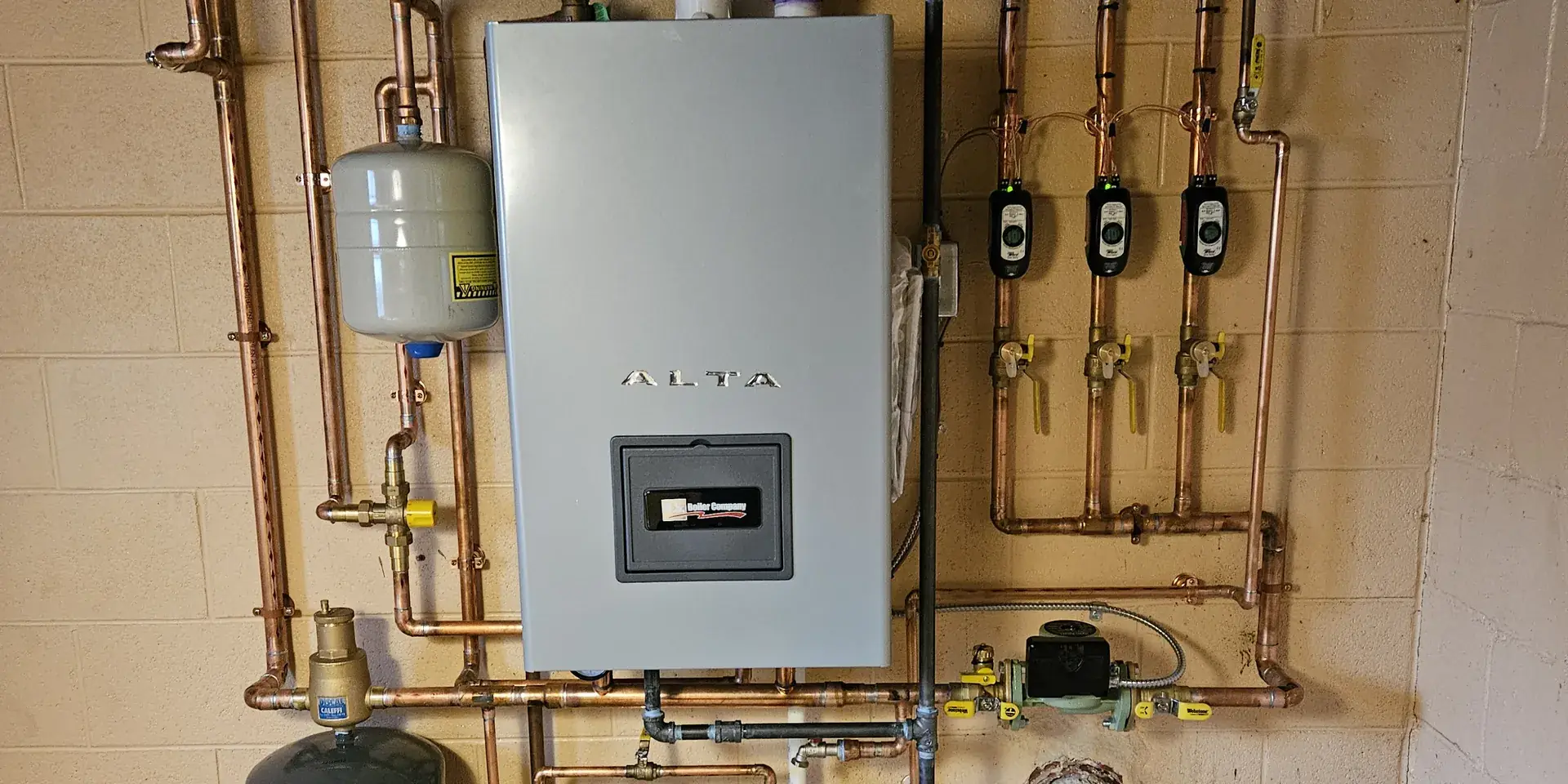
Finding water on the basement floor next to the furnace is unsettling. Furnaces burn gas, not water, so a puddle seems like it must mean something has gone badly wrong. Usually it has not. On most furnaces in Southeast Michigan, water is a normal byproduct of how the equipment works, and a leak means that water is not draining where it should. The source matters, though, because a few of the possible causes need attention quickly. Here is how to figure out where the water is coming from and what to do about it.
Quick answer
Most furnace leaks come from a high-efficiency furnace's condensate system: a clogged drain line or trap, a failed condensate pump, a disconnected hose, or a line that froze in a cold space. A whole-house humidifier or the air conditioning coil sitting on top of the furnace can also leak. Shut the furnace off if water is near wiring, clean up, and have the drain system cleared. Persistent leaks or rust inside the cabinet need a technician.
First, what kind of furnace do you have?
The type of furnace narrows down the cause right away.
A high-efficiency furnace, rated around 90 percent AFUE or higher, extracts so much heat from its exhaust that water vapor in the combustion gases condenses into liquid. That water collects in a trap and drains through a small tube to a floor drain or a condensate pump. On a cold day a furnace like this produces a steady trickle of water, and that is entirely normal. You can usually spot one by the two white PVC pipes coming off the top or side, one bringing in combustion air and one carrying exhaust out through a wall.
A standard-efficiency furnace, around 80 percent AFUE, vents through a metal flue into a chimney and should not produce liquid water in normal operation. If one of these is leaking, the water is most likely coming from something attached to it, such as a humidifier or an AC coil, or from a venting problem that needs a technician.
ENERGY STAR's furnace guide explains the efficiency ratings if you are not sure which you have. The rating is also printed on the yellow label or the rating plate inside the door.
The most common causes, from most to least likely
A clogged condensate trap or drain line. Over time, the trap and tubing collect sludge, a slightly acidic mix of condensate residue and debris. Once it clogs, water backs up and spills out of the trap, the drain connections, or the bottom of the cabinet. Many furnaces will also shut down on a pressure switch when the trap backs up, so you may notice no heat along with the water.
A failed or overflowing condensate pump. If the furnace is not next to a floor drain, a small pump in a plastic reservoir pushes the water to a drain or out of the house. These pumps wear out, their float switches stick, and their check valves gum up. If the reservoir is full and the pump is not running, it is the culprit. Many pumps have a safety switch that can be wired to shut the furnace off when the reservoir overflows, which is worth having.
A frozen drain line. This one is particular to our climate. If the condensate line, or the pump's discharge line, runs through a garage, crawlspace, or out an exterior wall, it can freeze solid in a cold snap. The water has nowhere to go and backs up into the furnace. If the leak started during a stretch of single-digit nights, look for any part of the drain line that runs through unheated space. The long-term fix is rerouting the line or adding heat tape, not repeated thawing.
A loose or cracked hose. The vinyl tubing that carries condensate can slip off its fitting, crack, or kink, especially after someone has bumped it while changing the filter. This is often visible right away.
The whole-house humidifier. Many Michigan homes have a humidifier mounted on the furnace ductwork, fed by a small water line. A stuck solenoid valve, a clogged drain, or a worn water panel can send water down the side of the furnace. If the water trail starts at the humidifier, shut its water supply valve and have it serviced. Our article on winter indoor humidity covers how these systems should be set up.
The air conditioning coil. The indoor AC coil usually sits in a metal box directly on top of the furnace. In summer, it pulls moisture out of the air and drains it through its own line. A clogged coil drain will overflow and run down onto or into the furnace. If the leak happens when the AC is running, the coil drain is the first suspect, not the furnace itself.
A cracked secondary heat exchanger or venting problem. Less common, but more serious. On a high-efficiency furnace, a failed secondary heat exchanger or an improperly pitched vent pipe can send condensate where it should not go. On a standard furnace, water in the cabinet can mean exhaust gases are cooling and condensing in a flue that is too large or too cold. Both need a technician, and both are reasons to make sure your carbon monoxide alarms are working.
What to do right now
1. If water is near wiring, the control board, or the electrical outlet, turn off the furnace at the service switch before you touch anything.
2. Wipe up the water and set down a towel so you can see where fresh water appears.
3. Follow the water upward. Is it coming from the drain tubing, the condensate pump, the humidifier, the AC coil box, or from inside the cabinet?
4. If the condensate pump reservoir is full, check that it is plugged in. A pump that hums but does not move water usually needs replacing.
5. If a drain line runs outdoors or through a cold space and it is very cold out, suspect a freeze.
What we do not recommend is pulling apart the trap or the pressure switch tubing on a high-efficiency furnace without knowing how it goes back together. Those parts are reassembled in a specific way, and a mistake can keep the furnace from running or let condensate into places it does not belong.
Why you should not ignore a slow drip
A small leak is easy to put off, but water causes trouble that grows quietly. It rusts the bottom of the cabinet and the blower housing. It can drip onto the control board or the igniter and cause intermittent failures that are hard to diagnose. It soaks into finished basement flooring and drywall, and standing water near the furnace is exactly the kind of damp spot where mold gets started. The fix for a clogged drain is usually quick and inexpensive. Waiting until the furnace shuts down on a January night is not.
How to prevent it
Most condensate problems are prevented at the annual fall tune-up. A technician flushes and cleans the trap and drain line, tests the condensate pump and its safety switch, checks the pitch of the vent pipes, and inspects the humidifier. If your drain line runs through a cold space, it is worth having it rerouted or protected before winter, rather than learning about it during the first deep freeze. And if you have central air, the AC coil drain should be cleared at the spring tune-up so summer condensate does not end up on the furnace.
Frequently Asked Questions
Is it normal for a furnace to leak water?
A high-efficiency furnace produces water as it runs, so some water in the drain line is normal. Water on the floor is not; it means the condensate is not draining properly. A standard 80 percent furnace should not produce liquid water at all.
Is a furnace leaking water dangerous?
Usually it is a drainage problem rather than a safety problem, but water can damage the control board and cause rust. Turn the furnace off if water is near electrical parts. A leak from inside the cabinet of a standard furnace can point to a venting problem and should be checked promptly.
Can a furnace leak water when the heat is off?
Yes. In summer, the water is usually coming from the air conditioning coil that sits on top of the furnace, or from a humidifier that was left with its water supply on.
Why does my furnace leak water only when it is very cold outside?
A condensate drain line that runs through an unheated garage, crawlspace, or exterior wall can freeze, which backs water up into the furnace. Rerouting the line or adding heat tape usually solves it for good.
How do I unclog a furnace condensate line?
Clearing the line itself is sometimes possible with a wet-dry vacuum at the drain end, but the trap and pressure switch connections on a high-efficiency furnace should be serviced by a technician. A yearly cleaning during the fall tune-up prevents most clogs.
If your furnace is leaking, or it is leaking and has stopped heating, Kern Mechanical can find the source and fix it properly. We work on every major furnace brand across Milford, Highland, White Lake, Commerce Township, Brighton, and the surrounding communities. Learn more about our furnace repair service or our full residential HVAC services, or request a free quote.
Free consultation
Talk to Kern Mechanical LLC
Our family-owned team handles residential, commercial, and industrial HVAC across Southeast Michigan. Quotes are always free.