
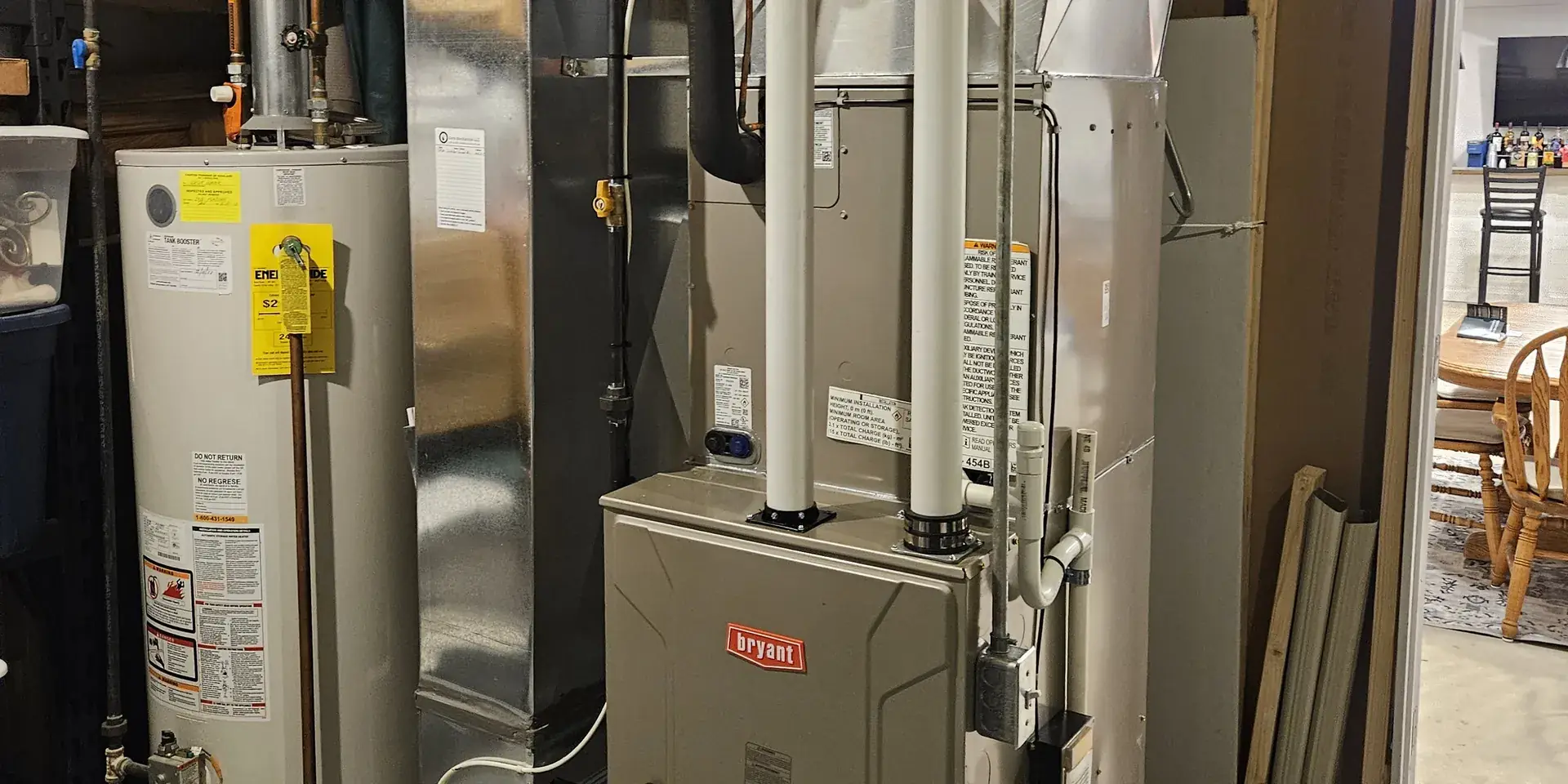
It is the question we hear more than any other lately, usually asked with a raised eyebrow: "A heat pump? In Michigan?" It is a fair thing to be skeptical about. The heat pumps many people remember from the 1990s did struggle once temperatures dropped into the 20s, and Milford sees average January lows around 21°F with stretches well below that. The technology has changed a great deal since then, but the honest answer still depends on your house, your existing furnace, and how you buy energy. Here is how we walk homeowners through it.
Quick answer
Yes. Modern cold-climate heat pumps are rated to deliver full or near-full heating capacity at 5°F and keep running well below 0°F, which covers almost every night in Oakland, Livingston, and the surrounding counties. For most Southeast Michigan homes, the best setup is a dual-fuel system: the heat pump handles the majority of the heating season efficiently, and your gas furnace takes over automatically on the coldest days.
What changed: cold-climate heat pumps are a different machine
A heat pump does not create heat the way a furnace does. It moves heat, pulling warmth out of the outdoor air and delivering it inside. There is usable heat in the air even at 0°F; the challenge has always been extracting enough of it, fast enough, when it is bitterly cold. Older single-speed units simply could not keep up, so they leaned on expensive electric resistance strips and homeowners saw their bills spike.
Today's cold-climate models use variable-speed inverter compressors, larger coils, and refrigerant designs that keep capacity up as the temperature falls. Units carrying a cold-climate rating are tested to hold their capacity at 5°F and most keep operating down to -15°F or lower. Ductless mini-split versions are especially strong in the cold, while ducted whole-home models are catching up quickly. That is the difference between the heat pump your neighbor gave up on years ago and what we install now.
Why dual-fuel is usually the right call in Michigan
Even a very good heat pump loses efficiency as it gets colder outside, because it has to work harder to pull heat from the air. At some point on a very cold night, natural gas becomes the cheaper way to heat your home. Where that crossover happens depends on the unit, your gas and electric rates, and how well your home holds heat, but in our area it often lands somewhere in the teens.
A dual-fuel system pairs a heat pump with a gas furnace and lets the thermostat choose. Above the balance point, the heat pump runs and you save money. Below it, the furnace takes over and you never notice the switch. Most homes we serve already have a furnace, so adding a heat pump in place of the aging air conditioner is a natural upgrade: you get efficient cooling in July, efficient heating for most of the winter, and your furnace becomes a backup that runs far fewer hours and lasts longer.
All-electric homes, homes with propane or oil heat, and additions or rooms without ductwork are the cases where a heat pump as the sole heat source makes the most sense. Propane and oil are expensive fuels, and a cold-climate heat pump typically costs far less to run than either.
What a heat pump costs to install and run
A heat pump replaces both your air conditioner and, for most of the year, your furnace, so it is fair to compare it against the cost of a new AC unit rather than against doing nothing. Installed prices in Southeast Michigan generally run higher than a standard central air conditioner, with cold-climate and variable-speed equipment at the upper end. The gap narrows once you factor in incentives.
One important update for 2026: the federal 25C tax credit that covered 30% of heat pump costs (up to $2,000) expired for equipment placed in service after December 31, 2025. It is no longer available. What remains are utility rebates from DTE Energy and Consumers Energy, which vary by equipment type and efficiency rating and change from year to year, and Michigan's income-qualified Home Energy Rebate programs for households that meet the eligibility limits. We check what you qualify for as part of every quote so you are working from current numbers, not last year's.
On operating cost, the math depends on your electric rate versus your gas rate. A heat pump moves two to three units of heat for every unit of electricity it uses, which is why it beats electric resistance heat, propane, and oil by a wide margin. Against inexpensive natural gas the savings are real but smaller, which is exactly why dual-fuel lets you use whichever is cheaper on a given day.
Questions to ask before you say yes
Ask for a load calculation, not a rule of thumb. Heat pumps are more sensitive to sizing than furnaces. An undersized unit will run on backup heat too often; an oversized one will short-cycle and cost more than it should. A proper Manual J calculation accounts for your insulation, windows, and square footage.
Ask how the balance point will be set and whether the thermostat is designed for dual-fuel switching. Ask about the outdoor unit's placement, because it needs to stay clear of drifting snow and roof runoff to work well in a Michigan winter. And ask what happens to your existing ductwork: heat pumps move air at lower temperatures than a furnace, so ducts that are undersized or leaky show their weaknesses quickly.
Finally, ask about the refrigerant. New equipment now uses R-454B rather than R-410A. That is not a reason for concern, but it is a reason to work with an installer who is trained and equipped for it.
Where heat pumps are a poor fit
We are not going to tell you a heat pump is right for everyone. If your home has very old, leaky ductwork and you are not ready to address it, a heat pump will disappoint you. If your furnace is only a few years old and your air conditioner still has life in it, there is no urgency. And if the numbers show your gas is cheap enough that the payback stretches beyond the life of the equipment, we will say so. Our job is to give you the full picture and let you decide, not to sell you the newest thing.
Frequently Asked Questions
At what temperature does a heat pump stop working in Michigan?
Cold-climate heat pumps are rated to hold full or near-full capacity at 5°F and keep operating to -15°F or lower. In a dual-fuel setup the thermostat switches to your gas furnace before the heat pump reaches that point, usually somewhere in the teens, so you never rely on the heat pump alone in the worst cold.
Do I need to keep my furnace if I get a heat pump?
In most Southeast Michigan homes with natural gas, yes, and it is a good thing. Keeping the furnace as backup in a dual-fuel system lets you run the heat pump when it is cheapest and the furnace when it is coldest. Homes on propane, oil, or electric resistance heat can often go heat-pump-only with a cold-climate model.
Is the federal heat pump tax credit still available in 2026?
No. The Section 25C Energy Efficient Home Improvement Credit expired for equipment placed in service after December 31, 2025. Utility rebates from DTE Energy and Consumers Energy and Michigan's income-qualified Home Energy Rebates may still apply. We confirm current incentives with every quote.
Will a heat pump raise my electric bill?
Your electric bill will go up because the heat pump uses electricity to heat, but your gas bill goes down by more in most cases. What matters is the combined total. A heat pump delivers two to three units of heat per unit of electricity, which is why the net cost is usually lower than propane, oil, or electric baseboard heat and competitive with natural gas across most of the season.
How long does a heat pump last in Michigan?
A well-installed and maintained heat pump typically lasts 12 to 15 years, similar to a central air conditioner. Because it runs in both seasons it accumulates hours faster than an AC unit, so annual maintenance matters more, not less.
If you are curious whether a heat pump makes sense for your home, we are glad to run the numbers with you. Our family-owned team serves Milford, Highland, Commerce Township, Brighton, Howell, Novi, and the surrounding communities across Oakland, Livingston, Genesee, Macomb, Wayne, and Washtenaw counties. Consultations and quotes are always free, and we will tell you plainly if a heat pump is not the right fit.
Free consultation
Talk to Kern Mechanical LLC
Our family-owned team handles residential, commercial, and industrial HVAC across Southeast Michigan. Quotes are always free.