
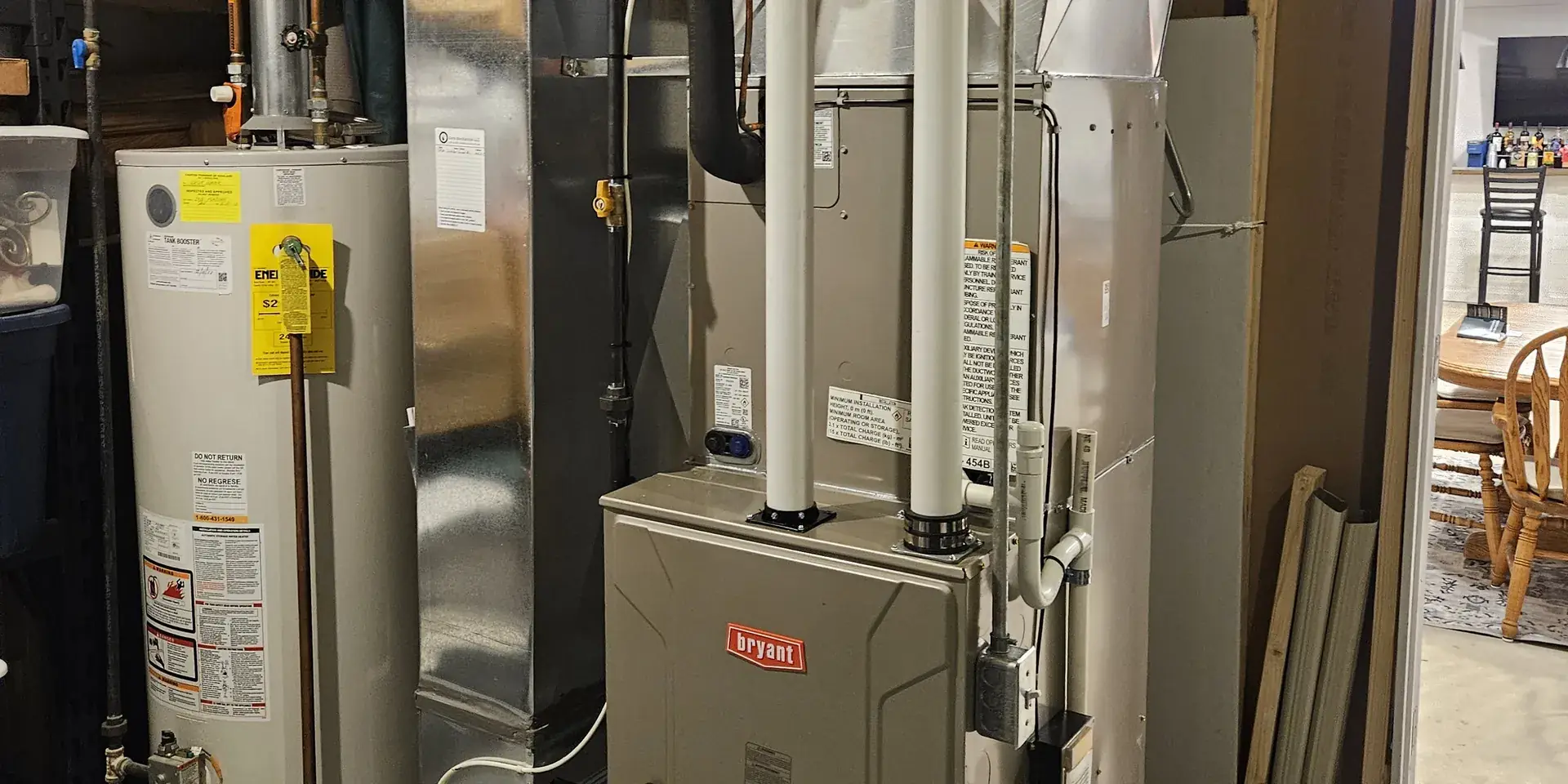
As the seasons change, your HVAC system becomes your home's lifeline for comfort, whether you are battling a cold January night or a humid stretch in August. A properly functioning system is essential, but even reliable equipment develops problems over time. Ignoring the early warning signs is how a manageable repair turns into a failure on the coldest night of the year. Here are three signs it is time to call a professional, plus what to check first and what should never wait.
Quick answer
Three signs point clearly toward a service call: noises your system has never made before, rooms that will not hold the same temperature as the rest of the house, and utility bills climbing without a change in how you use the system. None of them resolve on their own. In a Michigan climate, where equipment runs hard from October into April and again all summer, catching any of the three early is usually the difference between a repair and a replacement.
1. Abnormal Noises
Every HVAC system makes some sound during normal operation. What matters is a sound that is new. Screeching or squealing often points to a belt or a motor bearing. Banging and clanking suggest something loose or broken inside the blower assembly. Grinding usually means metal contacting metal, which is a problem that gets worse quickly. A rumble or a boom on startup can indicate delayed ignition in a gas furnace, and that one deserves prompt attention rather than a wait-and-see approach.
Addressing unusual sounds early, before they turn into bigger problems, is one of the simplest ways to protect your investment. A failing blower motor caught in October is a straightforward repair. The same motor caught in January, after it has run itself to failure, often takes the rest of the system with it.
2. Inconsistent Temperatures
If some rooms in your home feel noticeably colder or warmer than others, ductwork issues or a failing thermostat may be to blame. Uneven temperatures are often a sign your system is struggling to keep up, and in a two-story home they usually mean the second floor is not getting the airflow it needs.
Age matters in how you read this. The average central air conditioning system lasts 15 to 20 years, and gas furnaces in our climate fall in the same range. If your equipment is in that window and the temperature swings are new, a professional evaluation will tell you whether you are looking at a repair, a duct problem, or a system near the end of its life.
3. Higher Utility Bills
A spike in utility bills without a corresponding increase in usage is a red flag. An inefficient HVAC system works harder, and runs longer, to hold the same temperature. Clogged filters, low refrigerant, worn components, and a blower fighting restricted airflow are the usual culprits.
Compare against the same month a year earlier rather than against last month, since Michigan weather alone will swing a bill considerably from November to December. A meaningful year-over-year increase in similar weather is worth investigating.
What to check before you call
A fair number of service calls turn out to be something you could have handled in five minutes, so it is worth a quick look first. Check that the thermostat is set to the mode you expect and that its batteries are good. Pull the filter and hold it up to a light; if you cannot see through it, that alone can cause poor airflow, uneven temperatures, and higher bills. Confirm the breaker has not tripped and that the service switch beside the furnace, which looks like an ordinary light switch, has not been flipped off.
Also walk the house and open any supply registers that have been closed, and make sure furniture and rugs are not covering them. If the furnace has an obvious puddle beneath it, that is a condensate drain issue and does need a call, but it helps to know before we arrive.
The signs that should not wait
Most HVAC problems can wait until morning. A few cannot. If you smell gas, leave the house first and call your gas utility from outside, then call us. If a carbon monoxide alarm sounds, get everyone outside and call 911; do not spend time trying to identify the source yourself.
A burning smell that persists beyond the first few minutes of the heating season, visible soot or rust around the furnace, a burner flame that has turned yellow instead of blue, or a furnace that repeatedly shuts itself down on a safety limit are all reasons to stop running the system and call. So is no heat at all during a hard freeze, because a house without heat can reach the point of frozen pipes faster than most people expect.
Frequently Asked Questions
How often should my HVAC system be serviced?
Twice a year is the standard for a home with both heating and cooling: a fall visit before the furnace carries the winter and a spring visit before the air conditioner carries the summer. Filters need attention far more often than that, typically every one to three months depending on the filter and whether you have pets.
Is it normal for my furnace to make noise?
Some sound is normal, including the whoosh of ignition and steady airflow. A sound that is new is the thing to pay attention to. Screeching, banging, grinding, and a boom on startup all indicate specific mechanical or combustion problems rather than ordinary operation.
Why is one room always colder than the rest of my house?
Usually airflow rather than furnace capacity. Restricted or undersized ductwork, a closed or blocked register, a lack of return air in that room, or duct leakage in an unconditioned space are the common causes. A failing thermostat or a system that is genuinely undersized are less common but possible.
Should I repair my system or replace it?
Age is the anchor. Under 10 years old, repair is usually the right call unless the fix is unusually expensive. Past 15 years, a significant repair is harder to justify. A useful check is to multiply the equipment's age by the repair cost; once that number passes roughly $5,000, replacement generally makes more financial sense.
What should I check before calling for HVAC service?
Thermostat mode and batteries, the air filter, the breaker, and the service switch beside the furnace. Also open any closed supply registers. These four checks resolve a meaningful share of no-heat and poor-airflow calls before a technician is needed.
When is an HVAC problem an emergency?
A gas smell, a carbon monoxide alarm, or no heat during a hard freeze. For a gas smell, leave the house and call the gas utility from outside. For a carbon monoxide alarm, get everyone out and call 911. No heat in severe cold is urgent because of the risk to your plumbing as well as your comfort.
Catching these warning signs early saves money and keeps your home comfortable through a Michigan winter. If you are noticing any of them, contact us for a professional evaluation of your home's system. Kern Mechanical is family-owned, licensed and insured, serving Milford, Highland, Commerce Township, White Lake, South Lyon, Brighton, Howell, Novi, and the surrounding communities. Emergency service is available and quotes are always free.
Free consultation
Talk to Kern Mechanical LLC
Our family-owned team handles residential, commercial, and industrial HVAC across Southeast Michigan. Quotes are always free.